Guide
How to Choose the Best Mattress for Back Pain Relief
A supportive mattress keeps your spine aligned throughout the night, which can reduce morning stiffness and discomfort for many people with back pain. The right choice usually combines medium-firm support with enough cushioning at the shoulders and hips, though the ideal mattress varies by sleep position and the type of back pain you experience.
Last reviewed · Published by Essential Systems
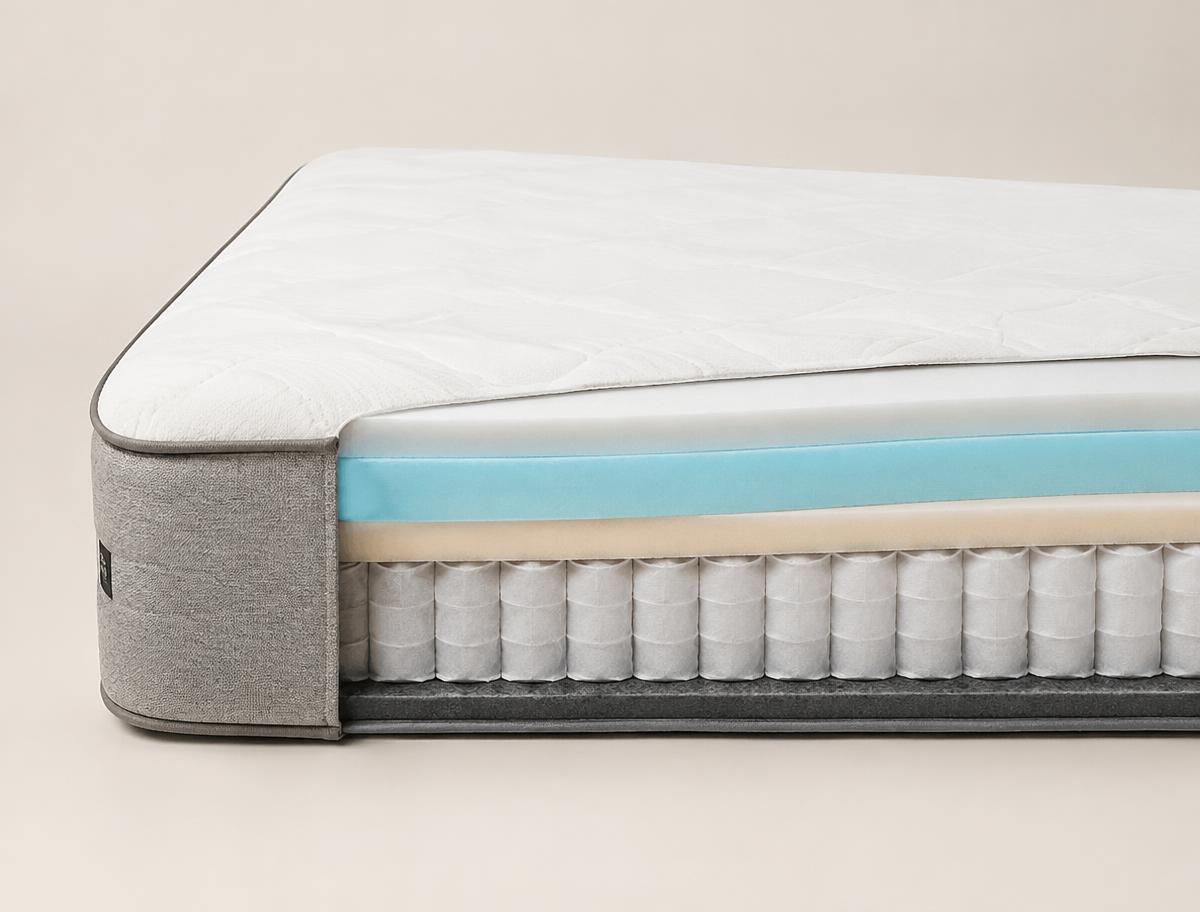
Why mattress support matters for back pain
When a mattress is too soft, your hips and shoulders can sink too deeply, pulling the spine out of a neutral line. When a mattress is too firm, it can create pressure points at the shoulders and hips without cradling the lower back, also disrupting alignment. The goal is a mattress that supports the heavier parts of the body while keeping the spine in a straight, neutral position.
Firmness guidance by back pain type
| Type of discomfort | Often helped by | Why |
|---|---|---|
| General lower back stiffness | Medium-firm | Balances support with pressure relief at the hips |
| Sciatica-related discomfort | Medium with contouring foam or latex | Reduces pressure points along the hips and legs |
| Upper back or shoulder tension | Medium with a softer comfort layer | Allows shoulders to sink slightly for alignment |
Mattress types to consider
- Hybrid mattresses: combine coil support with contouring comfort layers, often a balanced choice for back pain.
- Memory foam: contours closely to the body, which can relieve pressure points but may feel too soft for some back sleepers without added support layers.
- Innerspring with a plush top layer: offers firmer overall support with some surface cushioning.
- Latex: responsive support with less deep sinkage than memory foam, which some back pain sufferers prefer.
Match firmness to your sleep position
- Back sleepers generally benefit from medium to medium-firm support to maintain the natural curve of the lower back.
- Side sleepers often need a slightly softer feel to cushion the shoulders and hips while still supporting the waist.
- Stomach sleepers typically need firmer support to prevent the hips from sinking and straining the lower back.
Other factors that affect back pain
- Mattress age: mattresses lose support over time, which can contribute to new or worsening discomfort.
- Foundation and frame: a sagging or incompatible foundation undermines even a supportive mattress.
- Pillow and sleep posture: neck and spine alignment work together, so pillow choice matters too.
- Body weight: heavier individuals may need firmer support cores to avoid excess sinkage.
Questions to ask when you enquire
When you contact our team about a mattress for back pain, it helps to share your primary sleep position, your current mattress's firmness and age, and the type or location of your discomfort. This lets us point you toward mattress options and firmness levels worth exploring.
A note on medical advice
This page offers general information about mattress selection and is not medical advice. If you are experiencing persistent or severe back pain, please consult a qualified healthcare provider to address the underlying cause alongside any changes to your sleep setup.
Frequently asked questions
Looking for supportive options?
Tell us about your back pain and sleep position, and we'll help you explore suitable mattresses.
Ask About Supportive Mattresses