Guide
Understanding Mattress Firmness: Finding Your Ideal Support
Mattress firmness describes how soft or hard a mattress feels when you lie on it, typically ranked on a scale from very soft to extra firm. Finding the right firmness depends on your sleep position, body weight, and personal comfort preferences, since the same mattress can feel different to different people.
Last reviewed · Published by Essential Systems
What the firmness scale means
Retailers commonly describe firmness on a simple scale, though exact definitions can vary between manufacturers.
| Firmness level | General feel | Often suited to |
|---|---|---|
| Soft | Noticeable sinkage, close body contouring | Lighter side sleepers |
| Medium | Balanced contouring with support | Combination and back sleepers |
| Medium-firm | Slight contouring with firmer support | Most sleep positions and body types |
| Firm | Minimal sinkage, strong support | Stomach sleepers and heavier individuals |
Firmness versus support: an important distinction
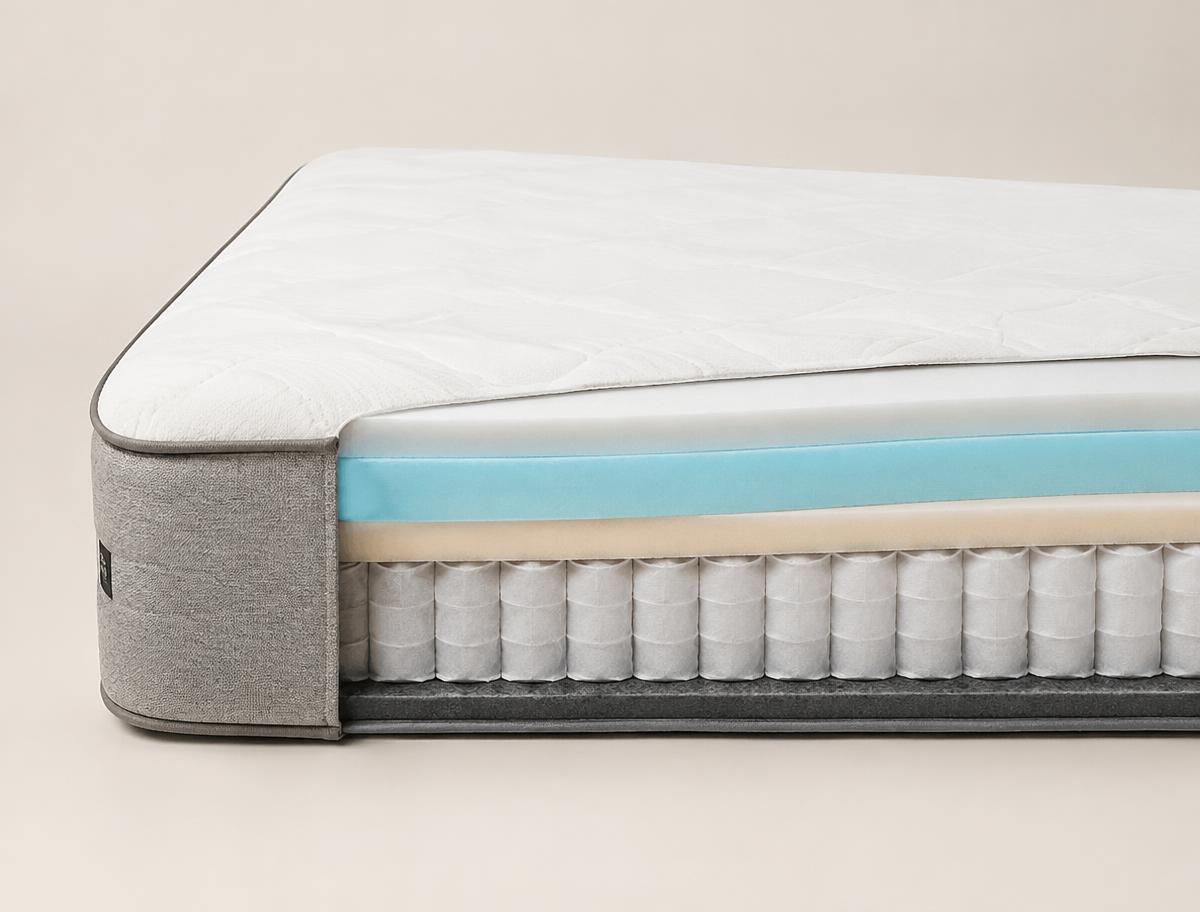
Firmness is how a mattress feels on the surface, while support is how well it keeps your spine aligned. A mattress can feel soft on top while still offering strong support underneath, which is common in hybrid designs with supportive coil systems beneath a plush comfort layer.
How sleep position affects ideal firmness
- Side sleepers often prefer softer to medium mattresses that cushion the shoulders and hips.
- Back sleepers typically do well with medium to medium-firm mattresses that support the lower back.
- Stomach sleepers generally need medium-firm to firm mattresses to avoid the hips sinking too deeply.
- Combination sleepers who shift positions often find medium mattresses the most versatile.
How body weight changes the equation
- Lighter sleepers (under about 130 lbs) tend to feel mattresses as firmer than the stated rating.
- Average-weight sleepers (about 130 to 230 lbs) usually experience firmness close to the stated level.
- Heavier sleepers (over about 230 lbs) often feel mattresses as softer and may want a firmer option or one with reinforced support layers.
How materials influence firmness
- Memory foam contours closely and can feel softer initially, with firmness varying by foam density.
- Latex offers a responsive, slightly firmer contouring feel compared to memory foam.
- Innerspring mattresses rely on coil gauge and comfort layer thickness for their firmness level.
- Hybrids blend coils and foam or latex, allowing manufacturers to fine-tune firmness.
Testing firmness for yourself
Because firmness perception is personal, we recommend reviewing detailed product descriptions and discussing your preferences with our team, then using the Comfort Guarantee trial period to confirm the mattress feels right once you are sleeping on it at home.
Frequently asked questions
Want help picking a firmness level?
Tell us how you sleep and we'll help you find mattresses in the right firmness range.
Browse Mattresses