Guide
Memory Foam vs. Innerspring vs. Hybrid Mattresses: A Detailed Comparison
Memory foam, innerspring, and hybrid mattresses each use different construction methods, which leads to distinct differences in feel, motion isolation, breathability, and durability. Understanding these differences can help you decide which type matches your sleep position, temperature preferences, and budget.
Last reviewed · Published by Essential Systems
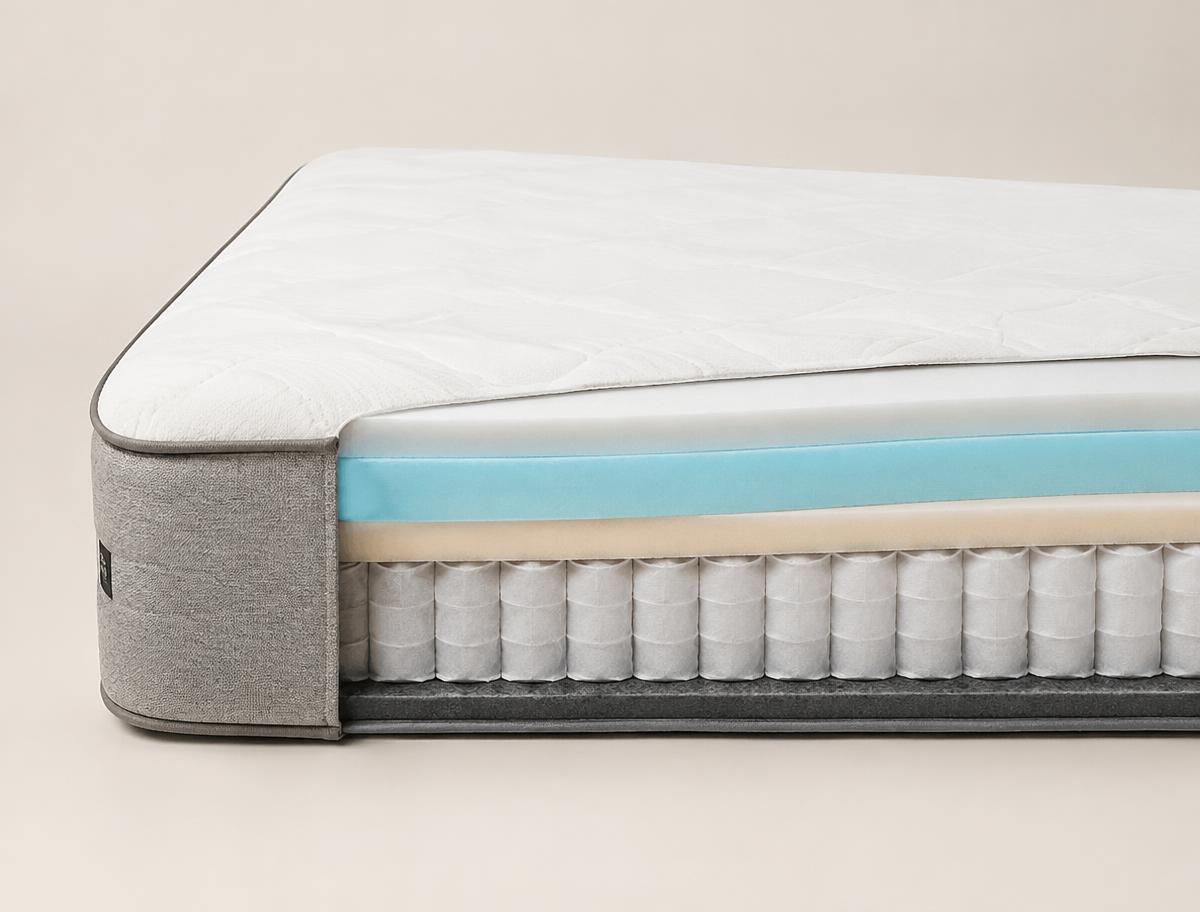
How each type is built
Memory foam
Built with layers of viscoelastic foam that contour closely to the body and slowly return to shape, providing pressure relief and minimal motion transfer.
Innerspring
Built around a core of steel coils topped with a comfort layer, offering a bouncier, more traditional feel with strong airflow.
Hybrid
Combines an innerspring coil core with foam or latex comfort layers, aiming to balance the support of coils with the contouring of foam.
Side-by-side comparison
| Feature | Memory Foam | Innerspring | Hybrid |
|---|---|---|---|
| Feel | Close body contouring | Bouncy, traditional | Balanced contour and bounce |
| Motion isolation | Excellent | Limited | Good |
| Breathability | Can retain more heat | Very breathable | Generally breathable |
| Edge support | Varies by model | Good | Often strong |
| Typical durability | 7-10 years | 6-8 years | 7-10 years |
Who tends to prefer each type
- Memory foam: side sleepers, those who want pressure relief, couples who want minimal motion transfer.
- Innerspring: sleepers who prefer a traditional bouncy feel, hot sleepers who prioritize airflow, those on a tighter budget.
- Hybrid: sleepers who want contouring without feeling too enclosed, couples with different preferences, back and combination sleepers.
Temperature and cooling considerations
Innerspring mattresses generally sleep the coolest due to open airflow around the coils. Hybrids often sleep cooler than all-foam options because of the coil layer, while memory foam can retain more body heat, though many modern memory foam mattresses include cooling covers or gel infusions to offset this.
Durability and long-term value
Durability depends heavily on the quality of materials used rather than type alone. Higher-density foams and higher-gauge coils generally last longer. A hybrid or innerspring mattress with a well-built coil system can offer strong edge support over time, which is useful for sitting on the edge of the bed or sharing the full surface with a partner.
Making your decision
If you are unsure which construction fits you best, consider what you value most: pressure relief and quiet (memory foam), traditional bounce and airflow (innerspring), or a balance of both (hybrid). Our team can help narrow down specific models once you share your preferences through an enquiry.
Frequently asked questions
Ready to compare mattress types in person?
Browse our mattress categories or ask our team for a side-by-side recommendation.
Shop Mattresses